
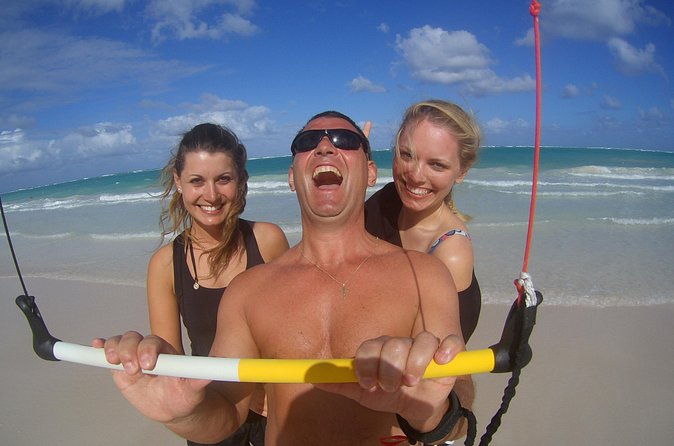
Review · PUNTA CANA SURF AND KITEBOARDING LESSONS
Kiteboarding Lessons in Punta Cana
The best part of this Punta Cana experience is that you get real instruction in the water, not a quick resort demonstration followed by a rental counter. Humberto and his team build the course from wind theory and trainer-kite control to body dragging and first waterstarts. I like the small groups, capped at four, and the daily three-hour format, which gives you time to practice instead of rushing through a lesson.
I also like the choice of one, two, or three days. A beginner can test the sport without committing to a full course, while a returning rider can use the sessions to fix technique or regain confidence. The main catch is the wind: kiteboarding needs suitable conditions, and you must make your own way to the academy unless pickup is selected. Bring patience, too. Your first waterstart may take longer than your beach photos suggest.
Key points before you book
- Three hours of instruction each day: Enough time for explanation, drills, and repeated practice without turning the day into an endurance test.
- A clear beginner progression: You start with wind theory and a trainer kite, then move to a full-sized kite, body dragging, board recovery, and waterstarts.
- Groups limited to four people: This matters in a technical sport because the instructor can watch your kite position and correct mistakes quickly.
- Humberto leads a hands-on school: The teaching team includes Humberto, Marino, Nelson, Felix, and Cuco, depending on the session.
- Punta Cana offers useful learning conditions: The school uses local spots such as Uvero Alto and the area near Pearl Beach Club, with shallow or flatter water reported at some locations.
- Weather can change the plan: If conditions are poor, the session may be moved to another date or fully refunded.
Why Punta Cana works for a first kiteboarding lesson
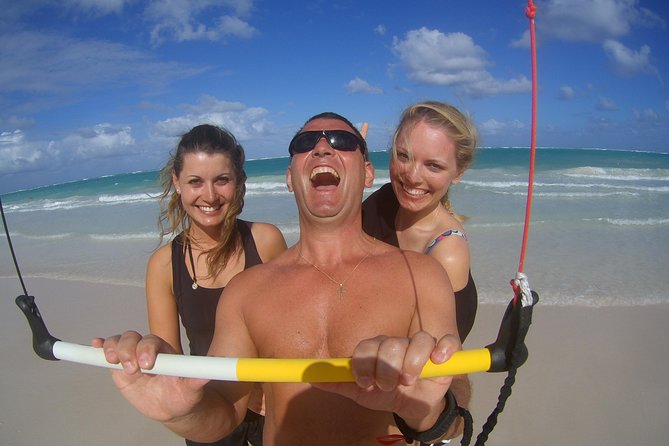
Kiteboarding looks wild from the beach. A rider appears to skim across the water with a large kite overhead, but the sport begins with careful control, not heroic jumps. You need to understand wind direction, the kite’s working area, the safety system, and how your body reacts when the kite pulls.
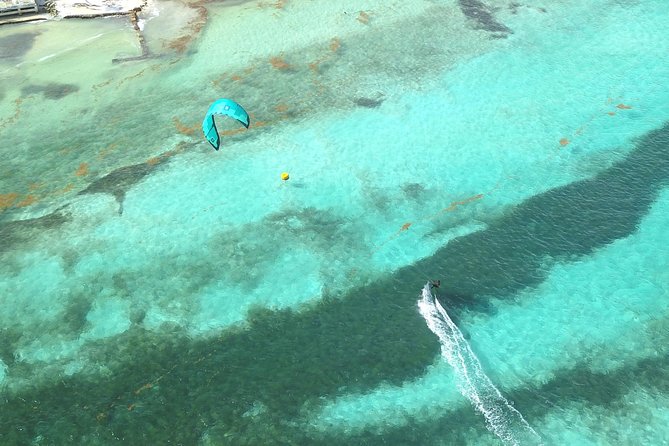
Punta Cana is a practical place to learn because the course can use warm Caribbean water and several kite spots around the region. The school has worked at Uvero Alto and near Pearl Beach Club, and some sessions have taken place in flat, knee-deep water. That kind of water is useful when you are learning because you can focus on kite control without immediately battling larger waves.
Conditions still vary. Wind is not a switch the instructor can turn on, and the activity operates in all weather conditions. That does not mean every day will deliver ideal kiteboarding weather. It means you should dress for the forecast and accept that a poor-weather cancellation may lead to a new date or a full refund.
The school may also move to a better wind location. One past outing took a student from Punta Cana to Las Salinas, a well-known kite spot in the Dominican Republic. That kind of flexibility can save a short holiday, though a longer transfer can also take a large part of your day. Ask about the exact location before you commit to a special trip.
More surf and kiteboarding in Punta Cana:
- Group Surf Lessons Punta Cana – Fun, Easy & Beginner-Friendly
★ 4.5 · 121 reviews - Punta Cana: One-on-One Surf Lesson on Macao Beach
★ 4.6 · 26 reviews - Full-Day Surf Camp in Punta Cana –Lessons, Beach Time & Adventure
★ 5.0 · 12 reviews
Your first three hours: wind, safety, and the trainer kite
You meet the instructor at the Kitesurf Academy in La Altagracia Province. After getting suited up, you receive a safety briefing before heading toward the beach. The supplied details specifically include professional instruction and a helmet. Do not assume that food, drinks, hotel transport, or every piece of kite equipment is included in the listed price without checking your selected option.
The first lesson begins on the sand with wind theory and the wind window. This is not filler. The wind window explains where the kite can fly in relation to you and why a small movement of the bar can produce a large change in power. Learning this before entering the water helps you avoid treating the kite like a simple beach toy.
You then handle the equipment and begin with a trainer kite. This smaller kite lets you feel the pull and practice steering with one hand. Your instructor can watch how you hold the bar, how you position your arms, and how you respond when the kite moves toward the edge of its working area.
For a complete beginner, this first stage may be the most important part of the whole course. The sport rewards calm, repeatable movements. You may leave the first day without riding across the water, but you should have a better sense of how the kite creates power and how to reduce it.
The class lasts about three hours, though your actual time moving the kite will include instruction, setup, safety reminders, and rest. That is a sensible rhythm for a new sport. Your attention can fade when you are learning several controls at once, especially under a hot tropical sun.
Lesson two: a full-sized kite and body dragging
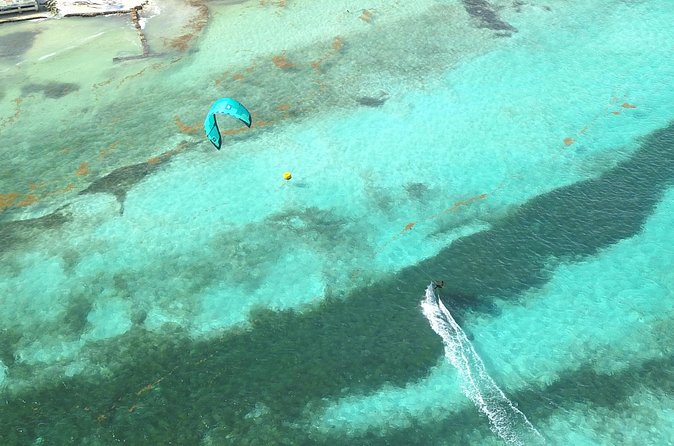
The second session moves to a full-sized kite and adds water work. This is where the experience begins to feel less like a lesson on the beach and more like kiteboarding.
You learn to control the kite in the water, including a water relaunch. A kite will sometimes fall onto the water, and knowing how to bring it back into the air is a basic safety and riding skill. You also practice downwind body dragging, using the kite’s pull to move through the water without the board.
Body dragging teaches you to work with the kite while your body is being pulled in a controlled direction. It also prepares you for recovering your board. Expect this stage to feel strange at first. You are trying to steer a kite overhead, manage your body position, and keep track of where you are moving.
The school’s teaching style often includes corrections through a two-way radio system. Humberto has used BBTalkin radio instruction so he can give short directions while you are riding or body dragging. That can be more useful than an instructor shouting from shore, but equipment and teaching methods can vary by instructor and day, so confirm what will be used for your booking.
Some past sessions have also included drone filming. That can be fun for checking body position and saving a record of your progress, but it should be treated as an extra feature, not a guaranteed inclusion in the basic course.
By the end of lesson two, you might be moving with the kite and feeling the pull of the wind. The exact progress depends on conditions, fitness, and how quickly the controls make sense to you. The school suits beginners, but no instructor can promise that every person will ride independently after two days.
Lesson three: board recovery and your first waterstarts
The third day moves into the more satisfying part of the progression. You practice upwind body dragging, which helps you recover the board when it has drifted away. This drill is less glamorous than a jump, but it is one of the skills that makes a new rider more capable and less dependent on an instructor.
You then work on riding the board in both directions. Finally, you try your first waterstarts. This is the moment when the separate pieces of the course begin to connect: kite position, body angle, board placement, and timing.
A waterstart is not simply standing up while the kite pulls you. You need enough power to rise, but not so much that the kite sends you out of control. The instructor’s timing cues matter here, and the small group helps because Humberto or another teacher can watch each attempt and offer a specific correction.
The third day is especially valuable if you plan to keep kiteboarding after Punta Cana. It gives you more than a thrill ride. You learn how to relaunch, body drag, find a board, and ride in both directions. Those are practical building blocks for future lessons.
Still, you should not book three days solely because you expect a guaranteed independent ride. Wind strength, kite size, water conditions, and your own coordination all affect the pace. Think of the third day as your best chance to bring the skills together, not a promise of advanced riding.
More hands-On classes in Punta Cana:
- Chocolate Master Class & Taino Concept Store
★ 5.0 · 43 reviews - Punta Cana: Saona Island VIP 4 first-class beach and sunset
★ 4.0 · 30 reviews - Chocolate Master Class & Taino concept Store
★ 4.6 · 12 reviews - ‘Chillo al Coco’ Cooking Class & Taino Concept store
★ 4.7 · 10 reviews
The instructors and the teaching style
Humberto is the main name connected with Kiteology DR, and the teaching team has included Marino, Nelson, Felix, and Cuco. The school has worked with complete beginners, families, returning riders, and people who only had a day or two available in Punta Cana.
The strongest pattern in the instruction is patience. That matters because kiteboarding has a steep first learning curve. You may understand the explanation on the beach and then forget it as soon as the kite pulls you sideways. A calm instructor who can demonstrate, watch, and correct without making you feel foolish is worth paying for.
Humberto is identified in the supplied material as an IKO instructor, and his lessons have used a systematic approach to safety and kite control. The school has also worked with advanced riders who wanted technique help, not just beginners. You can contact the provider ahead of time to explain your level and ask which instructor will lead your session.
Past instruction has included newer kites and different kite sizes. However, the official inclusions name a helmet and professional guide, not a full list of equipment. Ask exactly what is supplied for your chosen course, especially if you already own a harness, board, wetsuit, or other gear.
Small groups make a real difference
The maximum group size is four people. In kiteboarding, that is a useful limit. You are not just listening to a talk. You are practicing a moving skill that requires the instructor to notice kite height, bar pressure, body position, and safety habits.
A four-person class will still involve waiting while someone else practices. That is normal, and watching another beginner can help you understand the drill before your turn. If you want constant one-on-one attention, ask about a private lesson. The school has provided private half-day and short-notice sessions in the past.
Families can also fit into the program. Instruction has been arranged for parents and children, and groups of friends have taken lessons together. The key issue is not simply age or enthusiasm. You need a moderate level of physical fitness and enough comfort in the water to follow instructions while handling equipment.
This is not a passive beach activity. You will be standing, swimming or body dragging, managing a kite, and repeating the same movement many times. The helmet is included, but you should dress appropriately for sun, wind, and water exposure.
Price, pickup, and what the $215.39 buys
The listed price is $215.39 per person. Since the experience can be booked for one, two, or three days, confirm which duration that price applies to before paying. The value looks strongest when you choose multiple days and use the course as a proper progression rather than a one-time thrill.
Three daily hours with a professional instructor, in a group capped at four, gives you focused teaching time. For a technical sport, that is more useful than a cheap, brief introduction where you spend most of the session waiting or figuring out basic safety alone.
The price does not include food and drinks. Hotel pickup and drop-off are also not included unless you select an option that provides transport. The standard meeting arrangement requires you to make your own way to the academy in La Altagracia Province, so add taxi or transfer costs when comparing the total price.
Pickup can be particularly useful if your resort is far from the school or if the wind location changes. Some past arrangements included hotel pickup, but do not assume that is part of the current base price. Confirm the pickup area, extra cost, meeting time, and final beach location.
Weather, cancellations, and planning your day
Kiteboarding depends on good wind and safe weather. The activity operates in all weather conditions, but poor conditions can still lead to a cancellation or a changed date. If the provider cancels because of weather, you can take another date or receive a full refund.
You can cancel for a full refund if you do so at least 24 hours before the local start time. Changes or cancellations inside that window are not accepted for a refund. This is worth noting if you are building a tight holiday schedule.
I would book the course early in a Punta Cana stay rather than on your last morning. That leaves room for a weather change and gives you a chance to repeat a session if the first day is cut short. The experience is commonly booked about six days ahead, which suggests you should not wait until the beach staff approaches you if specific dates matter.
Also keep your plans flexible. A session may shift from the usual beach to another spot with better wind. That can improve the lesson, but it may affect your transport time and the rest of your day.
Who should choose the one, two, or three-day option
Choose one day if you want a taste of the sport, have limited time, or are unsure how your body will handle the physical work. You should expect an introduction to wind theory, equipment, and trainer-kite control, with the chance to begin water skills if conditions and progress allow.
Choose two days if you want to move from basic control into full-sized kite work and body dragging. This is likely the best compromise for many holidaymakers. You get enough time to learn the safety foundation and start feeling the kite’s pull in the water.
Choose three days if you want the strongest chance to practice board recovery, riding both directions, and waterstarts. It is also the better choice for a returning rider who wants structured correction instead of simply renting equipment.
The course suits curious beginners, active couples, families, and riders who need a refresher. It is less suitable if you want a guaranteed day of uninterrupted riding, dislike changing plans, or prefer a fully passive excursion.
Should you book Kiteboarding Lessons in Punta Cana?
Book it if you want to learn a demanding sport with a real instructor, a small group, and a clear three-day progression. The most useful features are the four-person limit, the water-based practice, and the chance to work with instructors such as Humberto, Marino, Nelson, Felix, or Cuco.
Before booking, confirm the exact number of days covered by the $215.39 price, what equipment is included beyond the helmet, and how transport will work from your hotel. If your holiday dates are tight, schedule the lesson early and leave room for weather changes.
I would choose the two-day option for a first attempt and three days if learning to waterstart is a serious goal. Choose one day only if you mainly want to see if kiteboarding suits you. This is a hands-on lesson, not a guaranteed shortcut, but it gives you a sensible start in one of Punta Cana’s main kiteboarding areas.
FAQ
Where does the kiteboarding course start?
You meet the instructor at the Kitesurf Academy in Punta Cana, in La Altagracia Province, Dominican Republic.
How long is each daily lesson?
Each selected course includes an approximately three-hour lesson per day.
Can a complete beginner take the course?
Yes. No previous kiteboarding experience is required, and the first lesson begins with wind theory, equipment, and a trainer kite.
How many days can I book?
You can choose a one-day, two-day, or three-day course.
How many people are in each group?
The activity has a maximum of four participants.
What do I learn on the first lesson?
You learn about wind theory and the wind window, handle the equipment, pilot a trainer kite, and practice steering with one hand.
What do I learn on the second lesson?
You use a full-sized kite, practice water relaunches and downwind body dragging, and begin controlling the kite in the water.
What do I learn on the third lesson?
You practice upwind body dragging to recover the board, ride in both directions, and try your first waterstarts.
Is hotel pickup included?
Hotel pickup and drop-off are not included unless you select an option that provides them.
What happens if bad weather cancels the lesson?
You can be offered another date or a full refund if the provider cancels because of poor weather.
What is included in the price?
A professional guide and use of a helmet are included. Food and drinks are not included.
New in the Punta Cana listings
- Punta Cana : Saona Island Day Tour★ 4.5 · 19 reviews
- Saona Island Adventure From Punta Cana With Lunch and Transportation★ 5.0 · 7 reviews
- Saona Platinum Beach Day★ 4.0 · 54 reviews
- Santo Domingo Sightseeing Tour★ 4.0 · 9 reviews
- Santo Domingo Day Trip from Punta Cana★ 3.0 · 5 reviews
- Santo Domingo★ 3.0 · 5 reviews
- Santo Domingo Private Tour from Punta Cana★ 3.5 · 12 reviews
- Punta Cana Panoramic Tour of The City of Santo Domingo★ 4.0 · 18 reviews
Punta Cana Surf and Kiteboarding Lessons, compared.
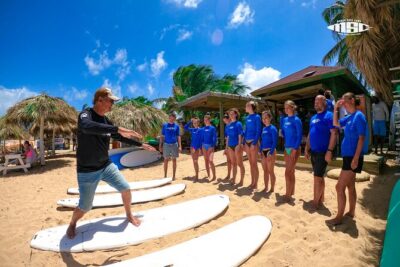
Group Surf Lessons Punta Cana – Fun, Easy & Beginner-Friendly
Read our review →
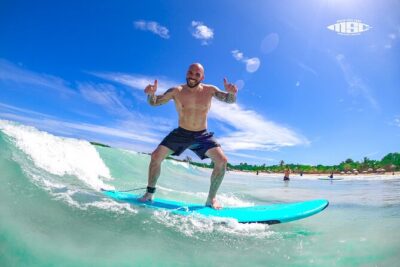
Full-Day Surf Camp in Punta Cana –Lessons, Beach Time & Adventure
Read our review →Group Surf Lessons Punta Cana– Fun, Easy & Beginner-Friendly
Read our review →Browse the lists this tour appears in