
Review · PUNTA CANA SCUBA DIVING
3 Days Open Water Diving Course in Punta Cana
Punta Cana’s clear Caribbean water is the main attraction here, but the real value is the step-by-step training that gets you ready for it. You begin with online theory, practice key skills in a swimming pool, then complete four open-water sessions at local reef sites and, when scheduled, the Monica shipwreck.
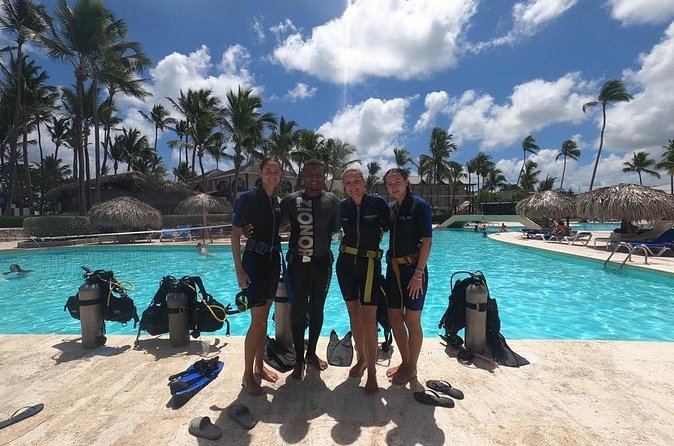
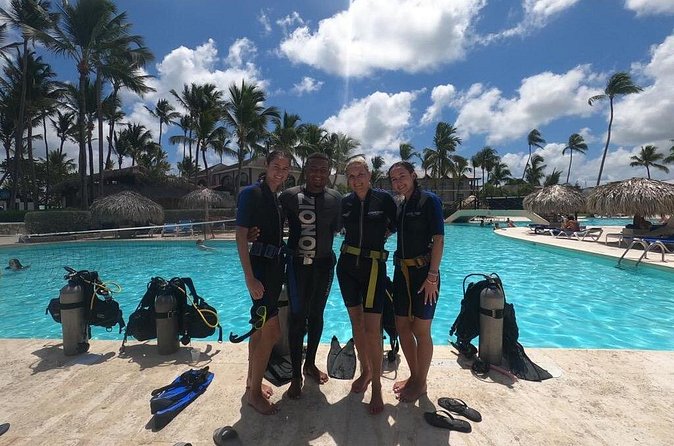
I like the small maximum group of eight, since learning to manage breathing, equipment, and safety feels easier when an instructor can keep a close eye on you. I also like the personal support from instructors such as Kelvin, Franklin, Gilberto, and George, who help new students move from nervous first attempts to a proper PADI certification.
The main consideration is time. This is a real certification course, not a quick introductory swim, so you need to study, attend the training sessions, and complete all four open-water sessions. A medical questionnaire also applies, and the price is a serious $490 per person.
Key points to know before booking
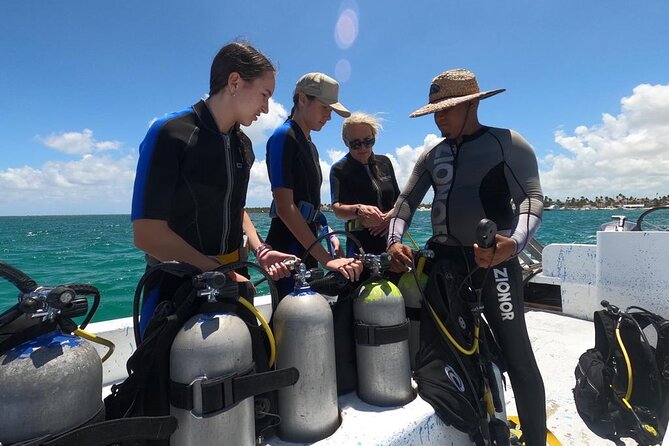
- Four open-water sessions are included, with the course qualifying you to scuba to 18 meters, or 60 feet, after successful completion.
- Pool practice comes before the sea, giving you a controlled place to learn equipment use, breathing, and safety skills.
- The Monica shipwreck may be part of the program, along with reef sites, depending on the schedule and conditions.
- Groups are limited to eight people, which helps keep instruction personal.
- The course may fit into two practical days, although the experience is sold as a three-day program.
- Pickup is offered, and the operator is also near public transportation.
What the three-day Punta Cana course actually involves
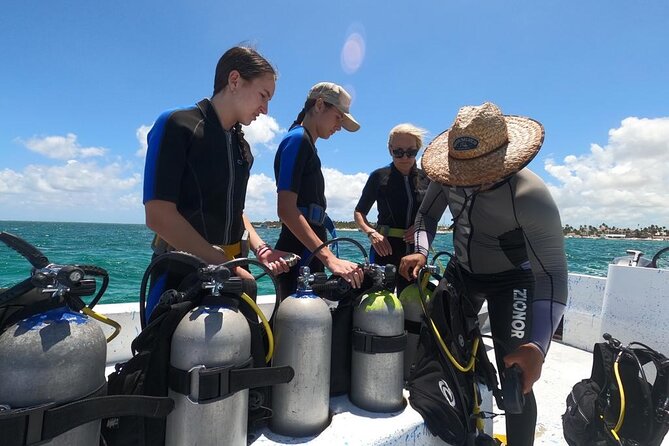
This course follows the familiar PADI Open Water structure: study first, practice in confined water, then show that you can use the skills in the sea. That order matters. You are not simply handed equipment and sent offshore.
The online theory section introduces the basic rules of scuba. You learn about pressure, air use, equipment, and safe behavior underwater. The physics may sound dry at first, but it explains why your ears need to equalize, why air changes as you go deeper, and why a careful ascent is essential.
You should complete the online work before the practical sessions as directed by the operator. That lets your pool time focus on doing rather than sitting through every classroom explanation. The course description specifically covers dive physics, equipment use, and safety procedures, so expect a proper training program rather than a resort activity with a short briefing.
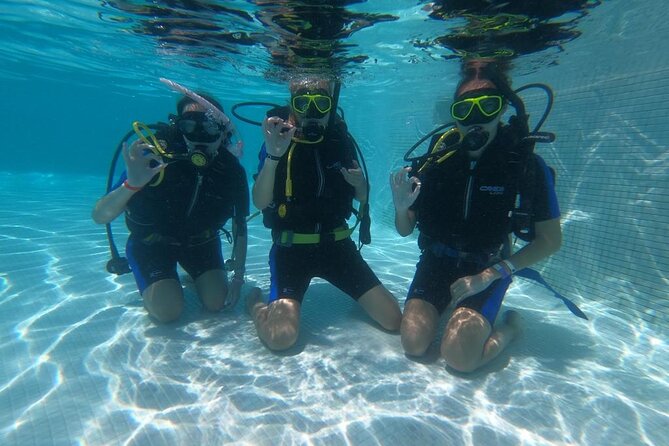
The second stage takes place in a confined swimming area. This is where the course becomes physical. You practice handling the mask, regulator, buoyancy equipment, and other scuba gear while an instructor watches your technique.
For a first-time student, the pool is often the most useful part of the course. It gives you room to pause, ask questions, and repeat a skill without the added movement of open water. The instructors can also see where you need help before you head to the reef.
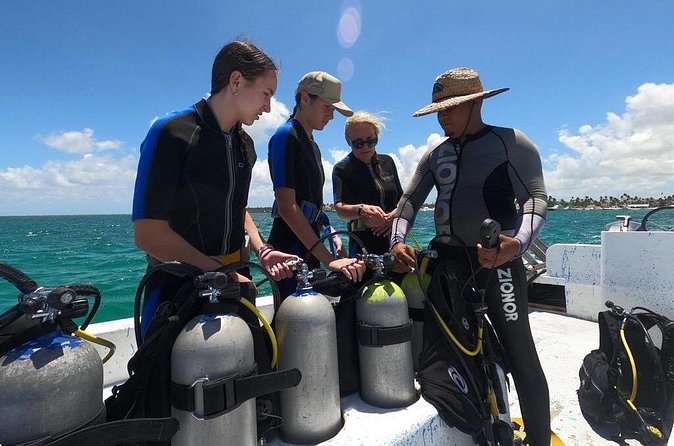
The final stage consists of four open-water sessions. These are the sessions that turn textbook knowledge and pool drills into real scuba ability. You will need to manage your equipment, breathing, position in the water, and safety procedures in the sea.
The maximum depth for the completed certification is 18 meters, or 60 feet. That is the standard depth limit stated for this course and allows you to use the certification in many places around the world. It does not mean every session reaches that depth. Actual depth depends on the training plan, site, weather, and your progress.
More scuba diving off Punta Cana:
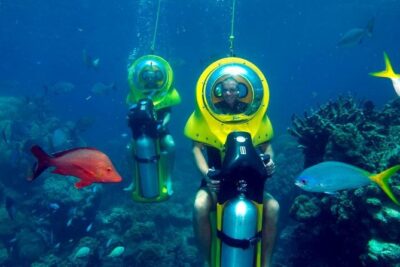
- Scuba Doo Diving Experience in Punta Cana
★ 4.0 · 422 reviews - Scuba Doo – Diving Scooters in Punta Cana
★ 4.2 · 283 reviews - 3 ADVENTURES: Sailing Catamaran Cruise – Hooka Diving – Snorkeling
★ 5.0 · 162 reviews
Reefs and the Monica shipwreck
Punta Cana’s underwater appeal comes from more than warm, clear water. The program can include reef sites filled with tropical fish and coral formations, giving you a chance to practice while looking at something more interesting than a pool wall.
The reef sessions are especially useful for new students because they combine training with a real sense of exploration. You may find yourself checking your equipment, controlling your position, and watching marine life at the same time. That makes the lessons memorable, but it also means you must keep your attention on the instructor’s directions.
A reported two-day schedule included four sessions at two different sites, with one outing at the Monica shipwreck and another focused on a reef. The wreck adds variety to the course. It is not just another patch of seabed, and the shape of a sunken vessel gives the underwater setting a stronger sense of place.
Still, you should treat the Monica wreck as a possible site rather than a guaranteed stop. The available information confirms it has been used during the course, but site choices can depend on weather, sea conditions, training needs, and scheduling. If the wreck matters to you, ask about it before booking.
The reef and wreck combination also gives you a useful comparison. Reefs offer coral and fish, while a wreck provides a man-made structure to view. Neither should distract you from the certification work. You are there to complete the required skills safely, with sightseeing as an important bonus.
Why the small group matters
The group limit is eight people. That is not a private lesson, but it is small enough to make a difference when you are learning a new physical skill.
You may need help adjusting equipment, equalizing pressure, controlling buoyancy, or staying calm when something feels unfamiliar. With fewer people in the group, instructors have a better chance of noticing those moments and giving you direct guidance.
The instructors named for this operation include Kelvin, Franklin, Gilberto, and George. Their roles may vary by session, but the practical benefit is clear: you are working with a team rather than relying on an impersonal, one-size-fits-all briefing.
This support is particularly important for first-time students. One beginner described Kelvin and Franklin as taking time to explain each stage carefully and making sure the student felt comfortable and understood the process. That is exactly what you want from a certification course. Confidence should come from clear practice, not from being rushed.
The staff has also helped with transportation and kept communication easy for students arranging their sessions. Since pickup is offered, ask when booking whether your accommodation is covered and what the pickup time will be. Those details are not specified here, so do not assume every Punta Cana address receives the same service.
Is $490 a fair price?
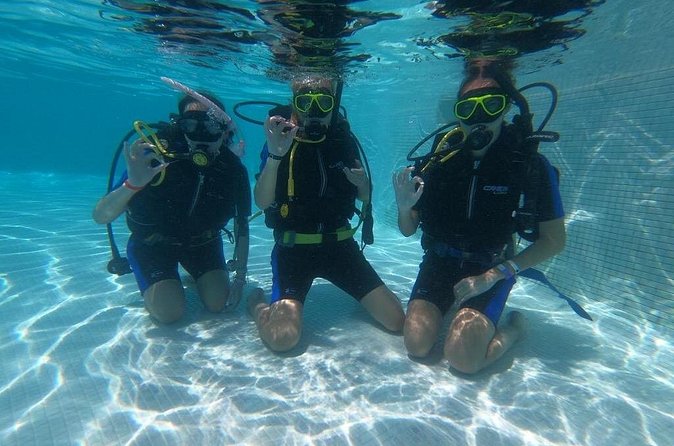
At $490 per person, this is not a casual add-on to a beach holiday. You are paying for a full PADI Open Water course with online theory, confined-water instruction, equipment training, and four open-water sessions.
The value is strongest if you want a certification you can use after leaving the Dominican Republic. The stated qualification allows you to scuba to 18 meters, or 60 feet, anywhere in the world, subject to the normal rules of the certification agency and local operators.
The price also buys structure and supervision. You are not simply renting equipment and following a guide around a reef. You are learning how the equipment works, practicing safety procedures, and proving that you can use the skills in open water.
The value is weaker if you only want a single underwater outing. In that case, a shorter introductory activity may suit you better, though this particular course is designed for certification and does not present itself as a one-session experience.
Group size helps the price feel more reasonable. A maximum of eight people offers more individual attention than a large boat group, while still avoiding the cost of a fully private instructor. Before booking, confirm what the $490 includes, since the supplied information does not list specific equipment, meals, certification fees, or hotel transfer limits.
A completely different sort of day out around Punta Cana:
- Private Airport Punta Cana to La Romana Bayahibe or Casa de Campo Resort Area
★ 5.0 · 6,662 reviews - Punta Cana Zipline Adventure with Buggies and Horseback Riding
★ 5.0 · 5,001 reviews - Full-Day Santo Domingo City Tour from Punta Cana
★ 4.5 · 4,500 reviews - Punta Cana: Catamaran Boat to Saona Island with Buffet Lunch
★ 4.4 · 3,822 reviews
Planning the three days
The stated duration is approximately three days, with operating hours listed from Monday through Saturday, 8:30 AM to 5:00 PM. The course is not offered on Sunday according to the schedule provided.
The first task is to make time for online theory. Do not leave it until the last minute if you can avoid it. The more comfortable you are with pressure, equipment, and safety concepts, the more attention you can give to your pool work.
Your pool session is the place to build basic control. This may be the least scenic part of the program, but it is where you can repeat techniques without open-water distractions. Take the opportunity to ask questions early. A small uncertainty in the pool can become a larger concern in the sea.
The four open-water sessions complete the practical side of the course. One schedule has arranged them over two days, but the advertised experience remains a three-day course. Your exact timetable may depend on the operator, conditions, and how quickly you complete each requirement.
The experience is booked an average of 64 days ahead, which suggests that planning early is sensible, especially if your Punta Cana visit falls during a busy period. Confirmation is received at booking, and the activity operates Monday through Saturday.
Fitness, medical screening, and comfort
You need a moderate level of physical fitness. Scuba is not a race, but you should be comfortable in the water and able to manage the physical demands of swimming, handling equipment, and completing training tasks.
A medical questionnaire applies before participation. This is a safety check, not a formality to ignore. Answer it accurately and ask the operator in advance if you have any health concern that might affect your eligibility.
The course also requires comfort with a structured learning process. You will be asked to study, listen, practice, and repeat skills. If you prefer a completely relaxed beach activity with no testing or required progression, this is not the right fit.
On the other hand, you do not need previous scuba experience. The course is built around learning the fundamentals, and the instructors work with beginners. The most useful attitude is patience. You should expect to spend time mastering simple tasks before enjoying the longer underwater sessions.
Weather and cancellation rules
The course depends on suitable weather and sea conditions. If poor weather cancels the experience, you can choose another date or receive a full refund.
There is also a minimum group requirement. If the operator cancels because that minimum is not met, you will be offered another date or experience, or a full refund. These protections are useful, but they can affect your holiday schedule, so avoid placing the course on the final day of your trip.
You can cancel for a full refund up to 24 hours before the start time. Cancellations or changes made less than 24 hours ahead are not accepted for a refund. The cut-off follows local Punta Cana time.
Because the activity involves open water, I would schedule it early or in the middle of your stay. That leaves room to move the course if weather interrupts the plan, and it avoids the stress of trying to complete certification just before your flight home.
Who will get the most from this course?
This course suits you best if you want a recognized entry-level scuba qualification and are willing to devote several days to learning. It is also a good choice if Punta Cana is your first chance to try scuba and you want more than a supervised introductory swim.
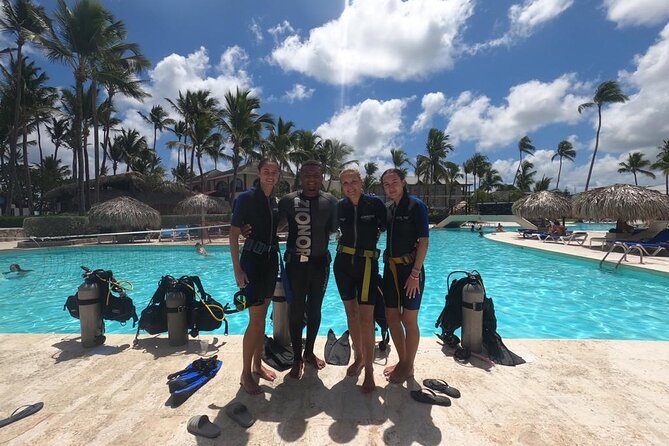
The small group limit and the direct help from instructors make it appealing to nervous beginners. Kelvin, Franklin, Gilberto, and George are the names associated with the teaching team, and the course places clear emphasis on explaining skills carefully and keeping students comfortable.
It also suits anyone interested in both reef scenery and a wreck site. The Monica shipwreck is not guaranteed, but its inclusion in some schedules gives the program a welcome change from reef-only outings.
This is less suitable if you have only a few free hours, dislike studying, or want a guaranteed sightseeing itinerary. The course has training goals, and those goals come before choosing the most dramatic underwater site.
Should you book the Punta Cana Open Water course?
Book it if you want to leave Punta Cana with a PADI Open Water certification, can commit roughly three days, and value close instruction over a quick tourist activity. The combination of pool practice, four open-water sessions, reef sites, and the possible Monica shipwreck gives you a useful first step into scuba.
I would book early, especially since the experience is commonly reserved well ahead of time. Confirm pickup, the exact schedule, what the price includes, and whether the Monica wreck is planned for your dates.
Skip it if you only want a brief look underwater or cannot fit the study and training into your holiday. For everyone else, $490 is a reasonable investment in a genuine certification course, provided you understand that the paperwork, pool work, medical questionnaire, and safety training are just as important as the fish and coral.
FAQ
How long is the scuba course?
The course lasts approximately three days.
How many open-water sessions are included?
Four open-water sessions are included.
What is the maximum depth allowed after completing the course?
The course allows you to scuba to a maximum of 18 meters, or 60 feet, anywhere in the world.
Does the course include pool training?
Yes. The program includes confined swimming pool sessions before the open-water portion.
Is online theory part of the course?
Yes. The course includes online scuba theory covering subjects such as physics, equipment use, and safety procedures.
Can beginners take this course?
Yes. The course teaches the fundamentals of scuba and is designed to provide the skills and knowledge needed for an Open Water certification.
Is pickup available?
Pickup is offered. The specific pickup area and timing are not provided, so confirm those details when booking.
How large can the group be?
The maximum group size is eight people.
What is the cancellation policy?
You can cancel up to 24 hours before the experience for a full refund. Cancellations or changes made less than 24 hours before the start time are not accepted. If poor weather or insufficient bookings cause the operator to cancel, you will be offered another date or experience, or a full refund.
New in the Punta Cana listings
- Punta Cana : Saona Island Day Tour★ 4.5 · 19 reviews
- Saona Island Adventure From Punta Cana With Lunch and Transportation★ 5.0 · 7 reviews
- Saona Platinum Beach Day★ 4.0 · 54 reviews
- Santo Domingo Sightseeing Tour★ 4.0 · 9 reviews
- Santo Domingo Day Trip from Punta Cana★ 3.0 · 5 reviews
- Santo Domingo★ 3.0 · 5 reviews
- Santo Domingo Private Tour from Punta Cana★ 3.5 · 12 reviews
- Punta Cana Panoramic Tour of The City of Santo Domingo★ 4.0 · 18 reviews
Punta Cana Scuba Diving, compared.
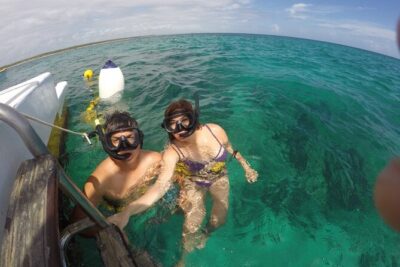
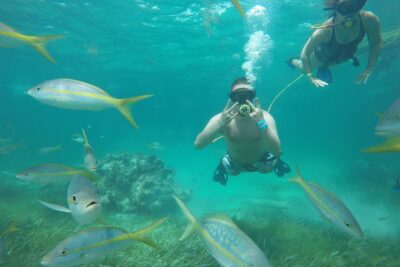
3 ADVENTURES: Sailing Catamaran Cruise – Hooka Diving – Snorkeling
Read our review →
PACKAGE DEAL Catamaran- Snorkeling – Hooka Diving – Parasailing
Read our review →
Scuba Doo Underwater Scooter in Punta Cana (Half Day)
Read our review →
Full-Day Catalina Island Scuba Diving Tour from Punta Cana
Read our review →
Browse the lists this tour appears in